

The island that changed how the world drinks tea
Grown in the highlands of Sri Lanka, known for centuries as Ceylon, this is tea defined by elevation, monsoon and terroir. Bright, brisk and unmistakably itself.


From a single estate to a global name
Tea came to Ceylon in 1867, when the Scottish planter James Taylor sowed the island's first commercial tea on the Loolecondera estate near Kandy. Within a few decades, the highlands that once grew coffee had become one of the world's great tea gardens.
Today "Ceylon tea" is a protected mark of origin, its lion emblem a guarantee that the leaf was grown and packed in Sri Lanka. The island remains one of the largest exporters of orthodox, whole-leaf tea on earth.
One island, many characters
Elevation, mist and monsoon shape every leaf. Each of Sri Lanka's growing regions lends its tea a character all its own, and a blender's job is to know which one a cup needs.
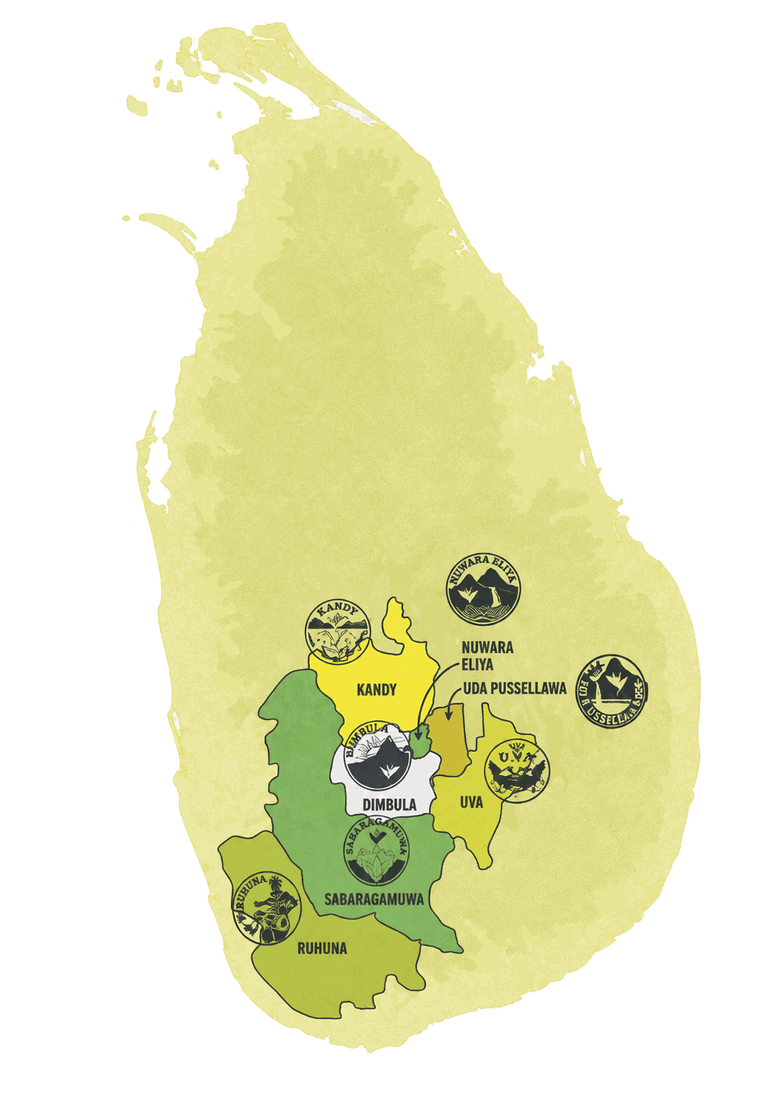
Nuwara Eliya
1,800 M+ · HIGH GROWNThe island's highest and most delicate: fragrant, brisk and pale, often called the champagne of Ceylon tea.
Dimbula
1,050–1,650 M · HIGH GROWNRefined and full-bodied, with a clean golden cup. The classic Ceylon profile.
Uva
900–1,500 M · EASTERN SLOPESDistinctively aromatic and mellow, shaped by the dry winds that sweep the eastern highlands.
Kandy
600–1,300 M · MID GROWNRich, coppery and full: the region where Ceylon tea began, and still among its most rounded.
Ruhuna
BELOW 600 M · LOW GROWNBold, dark and malty, grown in the southern lowlands. Deep colour and unmistakable strength.
Why altitude is everything
In Ceylon, the height at which a tea is grown is the single greatest influence on its character.
High-grown · above 1,200 m
Slow growth in cool mountain air makes a brisk, bright, fragrant cup with a light golden colour.
Mid-grown · 600–1,200 m
A fuller body and a rich, coppery liquor: rounded and smooth, the everyday classic.
Low-grown · below 600 m
Warm lowlands yield a bold, dark, malty tea with deep colour and real strength.

Where Ceylon Lush fits
We buy green leaf directly from around 8,000 smallholder farmers and manufacture it ourselves, in our own factories, in both the Orthodox and CTC methods. That means we choose the leaf, we choose the method, and we blend across regions to build a cup rather than accept whatever a broker offers.
Our factories sit across the low country and the Uva highlands, so the range of character described above is not theory to us. It is what arrives at the withering trough each morning.
How to brew a proper Ceylon
Good tea asks for very little: fresh water, a little patience, and a moment that belongs to you.

Explore our teas
SHOP ALL
Flavoured black teas
Fine Ceylon black tea blended with real spice, fruit and flower. Earl Grey, Masala Chai, Goji Rose and more.
DISCOVER →
Wellness teas
Green tea, rooibos and botanicals in pyramid bags, from a bright morning cup to a quiet evening ritual.
DISCOVER →Tea bags
Everyday Ceylon classics in individually enveloped bags.
DISCOVER →